Classic Solitaire: Regal Card
Ulpha Deep LabsCard
4.52.07K Reviews
- Version
- 1.15.1
- Installs
- 1.00M
- Age Rating
- Everyone
Screenshots
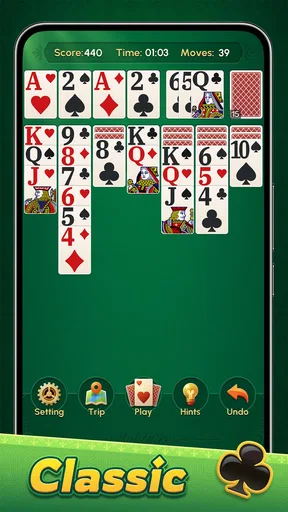
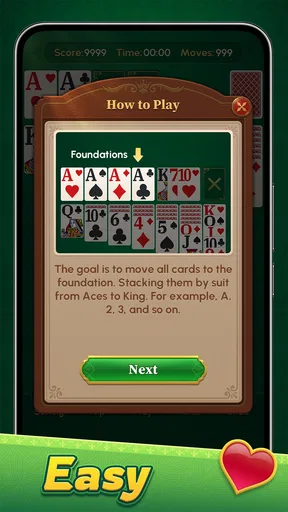
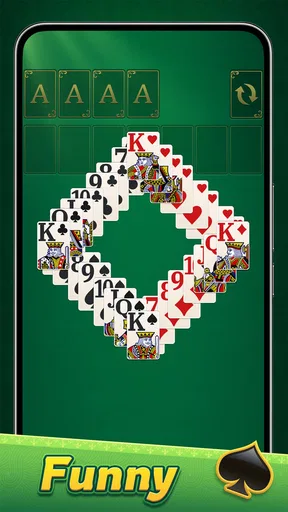
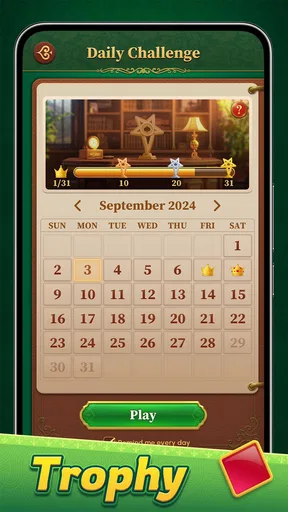
Our Review of Classic Solitaire: Regal Card
 Analysis by Appyee
I installed Classic Solitaire: Regal Card expecting a familiar way to fill a few quiet minutes, and that is exactly where it makes its strongest impression. This is a free card game from Ulpha Deep Labs built around classic Solitaire, with a clean purpose rather than a large collection of distractions. I can open it when I have a short break, play a hand without preparing anything, and put it away just as easily. That simplicity is its main attraction, but it also raises the important question: does a straightforward Solitaire game deserve a permanent place on a phone after the first week?
My answer is cautiously positive. It works best as a dependable mental pause, not as a deep strategy game or a constantly changing entertainment platform. The store positions it as a way to play Solitaire and exercise the brain, and in practice I found the value less dramatic but more believable: it encourages attention, planning, and patience in small doses. If you already enjoy arranging cards and making decisions with incomplete information, the format remains naturally replayable. If you need new challenges, social competition, or a steady stream of content, the experience may feel too narrow.
How the first week feels in everyday use
The opening appeal comes from recognition. I did not need to learn an unfamiliar ruleset, study a tutorial, or understand a complicated interface before starting. Classic Solitaire gives the game an immediate rhythm: inspect the layout, identify useful moves, uncover hidden cards, and decide whether to spend a move now or preserve an option for later. That low entry barrier makes it suitable for a quick session while waiting for an appointment, during a commute break, or at the end of the day when I want something interactive but not demanding.
That familiarity should not be confused with mindless tapping. A good hand still asks me to look beyond the most obvious move. Moving a card may expose another card, create an empty column, or block a useful sequence. I found the most satisfying moments came from resisting the first available action and considering what it would leave behind. This is where the game’s brain-training angle has some practical value: the exercise is really about visual scanning, sequencing, and avoiding impulsive decisions.
During the first few sessions, the compact design is an advantage. I can understand the board quickly, and the rules do not compete with the cards themselves. The game feels appropriate for people who want a traditional card pastime rather than an elaborate fantasy wrapper around Solitaire. That restraint also makes it easier to recommend to a family member who may prefer familiar games and a straightforward presentation. Its Everyone age rating reflects that broad accessibility.
One useful habit I developed was treating each hand as a short planning exercise instead of chasing speed. I first checked which face-down cards could be uncovered, then looked for moves that preserved flexibility. That approach made losses feel less arbitrary because I could usually identify a decision that had narrowed my choices. Players who approach every hand as a race may miss this quieter strength. The game rewards careful observation more than frantic gestures.
The first-week limitation is equally clear: the core loop reveals itself almost immediately. There is no mystery about what the next session will involve. That can be comforting, especially when I want predictability, but it means the game’s novelty depends almost entirely on my own interest in another hand. I would not install it expecting a campaign, a changing narrative, or a sense of discovery. I would install it because the basic card puzzle is already enough.
Its popularity suggests that this focused approach connects with a substantial audience. The game has passed one million installs and holds an average rating of 4.5, which fits my impression that it delivers the expected Solitaire experience effectively. Those figures do not turn it into a better game by themselves, but they do make it easier to see this as an established casual option rather than an obscure experiment.
Who gets the most from the basic format
I think it is especially well suited to three kinds of players. The first is someone who already knows Solitaire and wants a convenient version without learning anything new. The second is a casual player who enjoys small logic tasks but does not want a long commitment. The third is anyone trying to replace passive scrolling with an activity that still feels light. In each case, the game’s value comes from being available at the exact moment attention is available.
It is less suitable for players who measure value by constant progression. If you want unlockable characters, competitive rankings, multiplayer matches, or a large menu of card variants, this focused card game is unlikely to satisfy for long. A broader card collection or a puzzle game with varied daily challenges would be a better choice for that audience. I would also skip it if Solitaire itself has never appealed to you; a polished presentation cannot remove the repetitive nature of repeatedly building and clearing card stacks.
Why it can survive beyond the first month
After the initial familiarity wears off, the question becomes whether Solitaire can support a habit. In my experience, it can, but only when I use it in the right way. The game is strongest as a repeatable ritual: one hand with morning coffee, a short break between tasks, or a few minutes before putting the phone down at night. It does not need to create a dramatic reason to return. Its recurring value comes from being predictable, quick to understand, and mentally active without asking for a large block of time.
A realistic everyday scenario is a lunch break when I have ten minutes and do not want to start a video or open a social feed. I can begin a hand, make a few deliberate moves, and stop when the break ends. Even if the hand is unfinished, the activity does not demand that I remember a storyline or maintain a complicated setup. That makes it more practical than many games that are technically casual but encourage longer sessions than I intended.
The game also works as a concentration reset. When I have been switching between messages and tasks, focusing on card order gives my attention one manageable problem. I would not describe that as formal cognitive training, and I would not use it as a substitute for exercise, sleep, or learning. Still, the act of scanning the columns and planning a sequence feels more engaged than automatically refreshing a feed. That modest benefit is enough to keep the app useful for me.
For month-to-month use, I recommend setting a personal purpose rather than expecting the app to supply one. I might play slowly and focus on better decisions, use it as a timed break, or simply play a single hand before returning to work. This creates variation through the way I play, even though the underlying rules remain stable. Without that intention, sessions can blur together and the game can become another icon I open out of habit without getting much from.
The developer, Ulpha Deep Labs, has kept the identity of the product clear: it is a classic card game rather than a large entertainment package. That clarity is valuable over time because there is little to maintain mentally. I do not need to follow events, remember complex systems, or keep up with a changing meta. For some players, that is precisely the appeal. The trade-off is that the game’s lasting value depends more on the timelessness of Solitaire than on visible evolution.
What maintenance really involves
From a user’s perspective, the maintenance burden is low because the game asks for very little ongoing attention. I can return after a gap without relearning controls or remembering where I left off in a larger progression system. That makes it a good candidate for a phone that should remain useful rather than demanding. The current version is 1.15.1, and the game supports Android 7.0 or later, so compatibility is broad enough for many older Android devices.
The more important maintenance is personal. I need to decide whether the app is helping me take a deliberate break or simply extending my screen time. Solitaire is easy to justify because it feels productive, but a sequence of hands can still become procrastination. I found it helpful to stop after a natural endpoint instead of automatically starting another hand. That small boundary preserves the game’s value as a break rather than turning it into a background habit.
There is also a practical storage decision. Because the experience is focused, I would not keep it installed alongside several other Solitaire apps unless I had a specific reason. Most people only need one version of this familiar game. If you already have a Solitaire app that you enjoy and it meets your needs, switching may not produce a meaningful improvement. The strongest case for this title is convenience and fit, not a radically different interpretation of the genre.
The free price makes trying it uncomplicated. I can test whether its presentation and pacing suit me without treating the installation as a major commitment. That matters for a simple game because personal preference is difficult to predict from screenshots or a short description. A player may love the calm repetition, while another may find the same repetition tiring within a few sessions. The sensible approach is to judge it by whether it earns regular use, not merely whether it is pleasant on the first launch.
Where fatigue starts to appear
The biggest source of fatigue is structural repetition. Every hand changes the arrangement of cards, but the basic decisions remain closely related. After several sessions, I became more aware of the pattern: inspect, move, reveal, reconsider, and eventually complete or abandon the hand. That loop is satisfying when I want a familiar puzzle, but it offers limited protection against boredom. Players who need frequent surprises should choose a more varied game.
Another possible friction point is the narrow emotional range. Solitaire can produce satisfaction when a difficult sequence works, but it does not usually create the excitement of a competitive match or the attachment of a story-driven game. There is no opponent to outthink in the traditional sense, and the reward is mostly internal: a cleared layout, a smart recovery, or a well-planned finish. That quiet tone is a strength for relaxation and a weakness for players seeking energy.
Difficulty can also feel personal rather than consistently dramatic. Some hands invite obvious progress, while others require patience and a willingness to accept that an early choice may have closed a path. I appreciate that this makes me think, but someone looking for a clearly staged challenge may find the experience less motivating. The game is better at offering repeated decisions than at delivering a carefully structured difficulty curve.
My practical tip is to avoid judging the app by a single unlucky hand. A loss does not necessarily mean the game is unfair, and a quick win does not necessarily mean I played brilliantly. Reviewing the sequence mentally is more useful: did I uncover the most restrictive card first, preserve an empty column, and avoid moving a stack simply because it was available? This turns repetition into a small learning loop. It is one of the few ways to deepen the experience without expecting new content.
Another tip is to play with a defined stopping rule. One completed hand, one short break, or a fixed personal limit is enough. Without one, the ease of starting again can make the app feel more consuming than it deserves to be. I would not call this a flaw unique to the game, but it matters when evaluating whether it has earned long-term space. A useful casual game should fit into life rather than quietly take over every empty moment.
How it compares with other card-game choices
Compared with a physical deck, this app is faster to start and easier to carry, but it loses the tactile pleasure of handling real cards. A physical deck also lets me invent variations or play with another person, while this app is designed for solo use. If the ritual of shuffling and dealing is part of what you enjoy, the digital version may feel less satisfying. If convenience matters most, the phone has the clear advantage.
Compared with more elaborate mobile card games, Classic Solitaire is calmer and less demanding. It does not ask me to learn a collection of characters, manage a deck-building system, or keep up with opponents. That makes it a better choice for a quiet reset. The trade-off is obvious: those other games may offer stronger long-term progression, more strategic variety, and more reasons to return beyond the basic pleasure of a hand.
Compared with a general puzzle app, Solitaire offers a particularly readable form of challenge. The rules are visible in the card layout, and the goal is easy to understand. A puzzle collection may provide more variety, but it can also create decision fatigue as I choose between dozens of modes. This game is preferable when I want one familiar activity immediately. I would choose the broader collection when I feel restless or want to explore something new.
That comparison explains why the game can maintain a place even without constant novelty. It occupies a specific niche: a free, accessible, solo card pastime for short sessions. It does not need to beat every alternative. It only needs to be easier and more pleasant to open than the alternatives at the moment I want Solitaire. In my case, it succeeds when I want a small mental task and fails when I want a sense of progression.
My long-term verdict
After the novelty fades, Classic Solitaire: Regal Card earns lasting space only if you value reliable repetition. I would keep it installed for someone who enjoys traditional Solitaire, wants a low-pressure way to occupy short breaks, or prefers a familiar brain exercise over endless scrolling. The free model and Everyone rating make it approachable, while the broad Android support makes it practical on many devices.
I would not recommend it as a universal game for every phone. Players looking for multiplayer interaction, a deep campaign, frequent new mechanics, or a strong progression system should look elsewhere. Even fans of Solitaire may eventually want a different option if they prefer more variants or a stronger sense of achievement. This title’s honesty is also its limitation: it gives me the classic card experience and does not pretend to be something larger.
My final recommendation is to treat it as a tool for intentional pauses rather than a main hobby. Use it for one thoughtful hand, a short concentration reset, or a familiar evening routine. Pay attention to whether you finish sessions feeling refreshed or merely ready to start another. The real test is not whether it remains exciting, but whether it remains useful. For me, its simple rules, accessible format, and quiet planning make that case often enough to justify keeping it around.
Ulpha Deep Labs has delivered a straightforward card game that understands the enduring appeal of Solitaire. Its value is not hidden in a complicated feature set; it is in the dependable moment when I open the app, see a layout, and know exactly how to begin. That will not satisfy everyone, but for the right player, it is a strong reason to return long after the first-week curiosity has disappeared.
Verdict
Strengths of Classic Solitaire: Regal Card
- Simple rules make it easy for beginners to start playing.
- Short rounds are convenient for quick breaks or casual sessions.
- Smooth card controls make moving and arranging cards feel natural.
- Offline play lets you enjoy games without a constant internet connection.
- Classic solitaire gameplay offers a relaxing alternative to more complex games.
Limitations of Classic Solitaire: Regal Card
- Limited variety may make the experience feel repetitive over time.
- Some features may be locked behind advertisements or optional purchases.
- Ads can interrupt the flow between rounds or during menu navigation.
- Winning often depends on the initial deal, reducing the sense of control.
- Players seeking multiplayer modes may find the solo focus restrictive.
Similar Picks in This Category
View All
Solitaire - Classic Card Games
MobilityWare4.6

UNO!™
Mattel163 Limited4.3

Spider Solitaire: Card Games
MobilityWare4.6

Solitaire.com - Classic Cards
Tripledot Studios Limited4.7

Plants vs. Zombies™ Heroes
ELECTRONIC ARTS4.1

Hearthstone
Blizzard Entertainment, Inc.4.1
Frequently Asked Questions
What is Classic Solitaire: Regal Card?
Classic Solitaire: Regal Card is a mobile card game centered on the traditional Klondike Solitaire experience. It offers familiar draw-and-place gameplay, allowing you to build foundation piles by suit while arranging cards in descending, alternating-color sequences. The regal visual theme gives the classic format a polished appearance, making it suitable for short relaxing sessions or longer games when you want a simple offline-style pastime.
Is Classic Solitaire: Regal Card free to download and play?
The game can generally be downloaded at no initial cost, but availability of advertisements, optional purchases, or premium features may depend on the version and your device’s app store. Before installing, check the store listing for in-app purchase details. Some features, cosmetic options, hints, or ad-removal tools may require payment, so it is worth reviewing the pricing information before committing.
Does the game include different Solitaire modes or useful features?
Classic Solitaire: Regal Card is primarily designed around the familiar Solitaire format, but the exact selection of modes can vary between releases. Players may find features such as hints, undo controls, scoring, daily challenges, statistics, or customizable card designs. If you are looking for a specific variation like Spider or FreeCell, confirm the current store description because the title may focus mainly on classic Klondike gameplay.
Can I play Classic Solitaire: Regal Card without an internet connection?
Solitaire games are commonly designed for casual play without a constant connection, and the core card experience may work offline after installation. However, advertisements, cloud synchronization, leaderboards, updates, or certain daily challenges may require internet access. I recommend launching the game once while connected and then testing airplane mode, since offline availability can differ by platform and app version.
Is Classic Solitaire: Regal Card suitable for beginners?
Yes, the game should be approachable for beginners because it uses the standard Solitaire rules most players recognize. The objective is to organize cards into foundation piles in ascending order by suit while uncovering hidden cards on the tableau. New players can benefit from undo and hint functions if available, although learning when to move cards strategically is still important for completing more difficult deals.
Play our best games!


